
The science behind the studio

A molecular graph.
Three ways
to read it.

Established graph neural networks, compared across twelve Tox21 assays. A closer look at how molecular structure becomes a biological activity signal.

Explore the evidence
2D graph inputs 12 assay endpoints 3 saved models
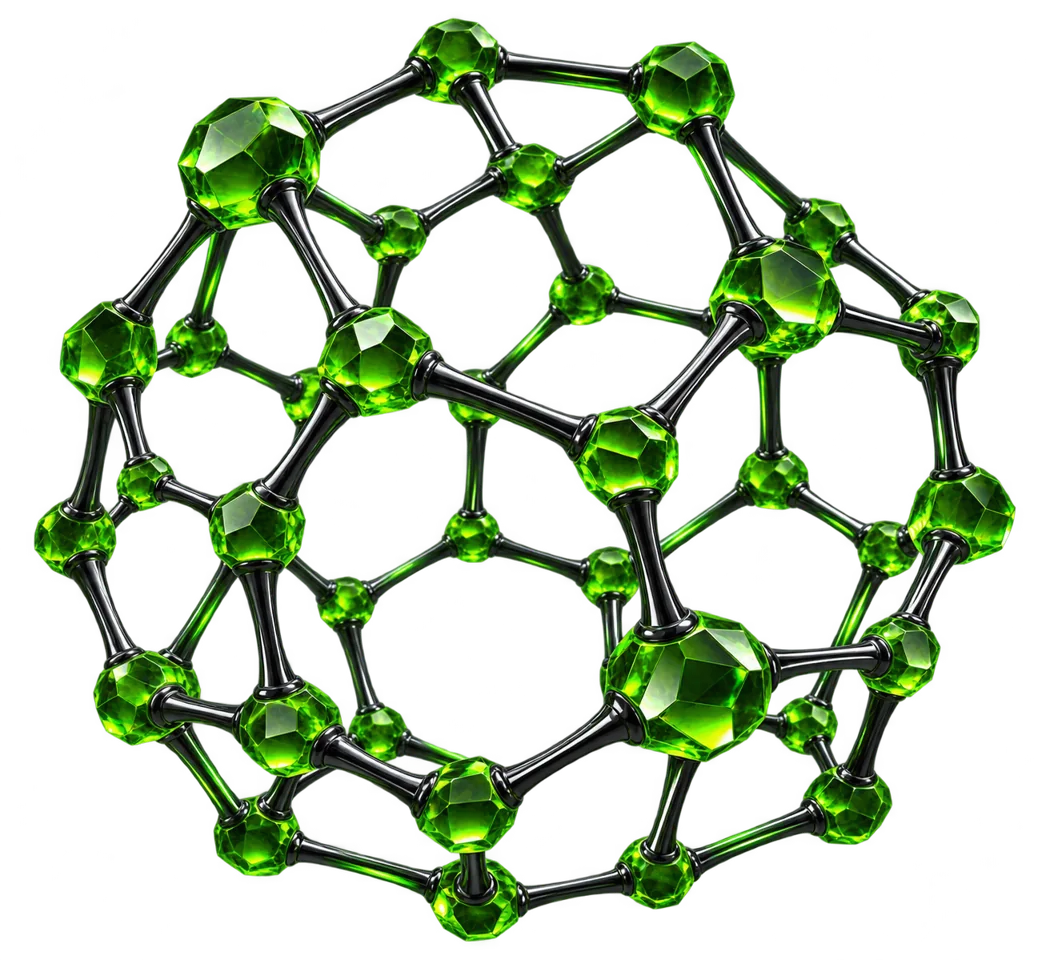
Emerald molecular graph sculpture
Atoms connect. Information travels.
01 / The approach

Structure in.
Context out.

ToxVision turns a SMILES structure into a graph of atoms and bonds. Three saved neural networks estimate activity in named biological assays.

The studio implements the assay-screening component of the Molecular Design Assistant. It supports exploration and model comparison; it does not generate molecules, optimize drug candidates, or determine overall chemical safety.

01SMILESMolecular structure
02GraphAtoms & bonds
03Signals12 biological assays
02 / The architectures

Same molecule.
Different conversations.

Each architecture passes information between connected atoms in a different way. Predictions remain separate so their differences stay visible.

Graph convolution

GCN

Learn from the neighborhood.

A graph convolutional network aggregates neighboring atom information using molecular connectivity. Bond attributes are not consumed by this checkpoint.

Trainable parameters
336,396
Graph layers
4
Hidden dimensions
256
Graph isomorphism

GINE

Bring the bonds into view.

An edge-aware graph isomorphism network incorporates bond attributes when combining information from neighboring atoms.

Trainable parameters
602,672
Graph layers
4
Bond attributes
Used
Graph attention

GATv2

Learn which neighbors matter.

Dynamic attention learns how to weight neighboring atoms. Four attention heads provide distinct learned views; bond attributes are not consumed.

Trainable parameters
538,380
Attention heads
4
Bond attributes
Not used
Abstract emerald molecular surface
Tox21One molecule.
Twelve questions.
03 / Biological endpoints

Read the pathway.
Keep the context.

The endpoints cover nuclear receptor-related activity and cellular stress responses. Missing labels are masked separately for each assay before endpoint scores are averaged.

7Receptor-related endpointsHormone, chemical-response & metabolic pathways
5Cellular stress endpointsOxidative, DNA, heat-shock, mitochondrial & p53 responses

Scores are uncalibrated activity signals. Concentration, exposure, metabolism and biological context matter. A higher score does not establish harm; a lower score does not establish safety.

04 / Scientific boundaries

Limits belong
beside the findings.

These qualifications define what the saved checkpoints and retrospective evaluation can support.

01 / Split design

Shared scaffolds remain.

The original fingerprint-grouped split is not scaffold-disjoint. Some historical training choices also use held-out label prevalence.

02 / Model uncertainty

One set of saved weights.

The checkpoints have not been retrained across five independent seeds. Bootstrap intervals do not measure training-run variability.

03 / External evidence

Retrospective assay tests.

Published assay labels are reference outcomes, not new laboratory experiments or clinical studies. Parent filtering does not guarantee unseen scaffolds or a new chemical domain.

04 / Representation

2D models. Illustrated views.

The models use two-dimensional atom and bond features. Three-dimensional views are generated depictions, and website artwork is decorative illustration.

05 / People behind the project

The research team.

Institute of Engineering & Management, Kolkata
School of University of Engineering and Management, Kolkata.

Saptarshi Ghosh01

Saptarshi Ghosh

Research team

Uday Sankar De02

Uday Sankar De

Research team

Mangaldip Dhua03

Mangaldip Dhua

Research team

Arnab Subhra Ghosh04

Arnab Subhra Ghosh

Research team

Sumit Chaira05

Sumit Chaira

Research team

Kishan SinghFaculty collaborator & corresponding author
ORCID 0009-0001-9943-4313
Read. Inspect. Reproduce.

Take the research
with you.

The paper, measured test report, and evaluation data are available for inspection.